From the sources you connect to the evidence you hand an auditor. Classification and checks run inside your IRIS deployment.
Sources you connect
Databases
Cloud storage
Microsoft 365
Google Workspace
SaaS and code
IRISRead-only access · Each connection tested
See it
Discover and classify
Data catalog
Control it
Access mapping and review
Access review decisions
Protect it
Protection checks
Risk scoring
Prove it
Audit evidence and compliance
DSAR and purpose
What you get
Coverage record
Evidence register
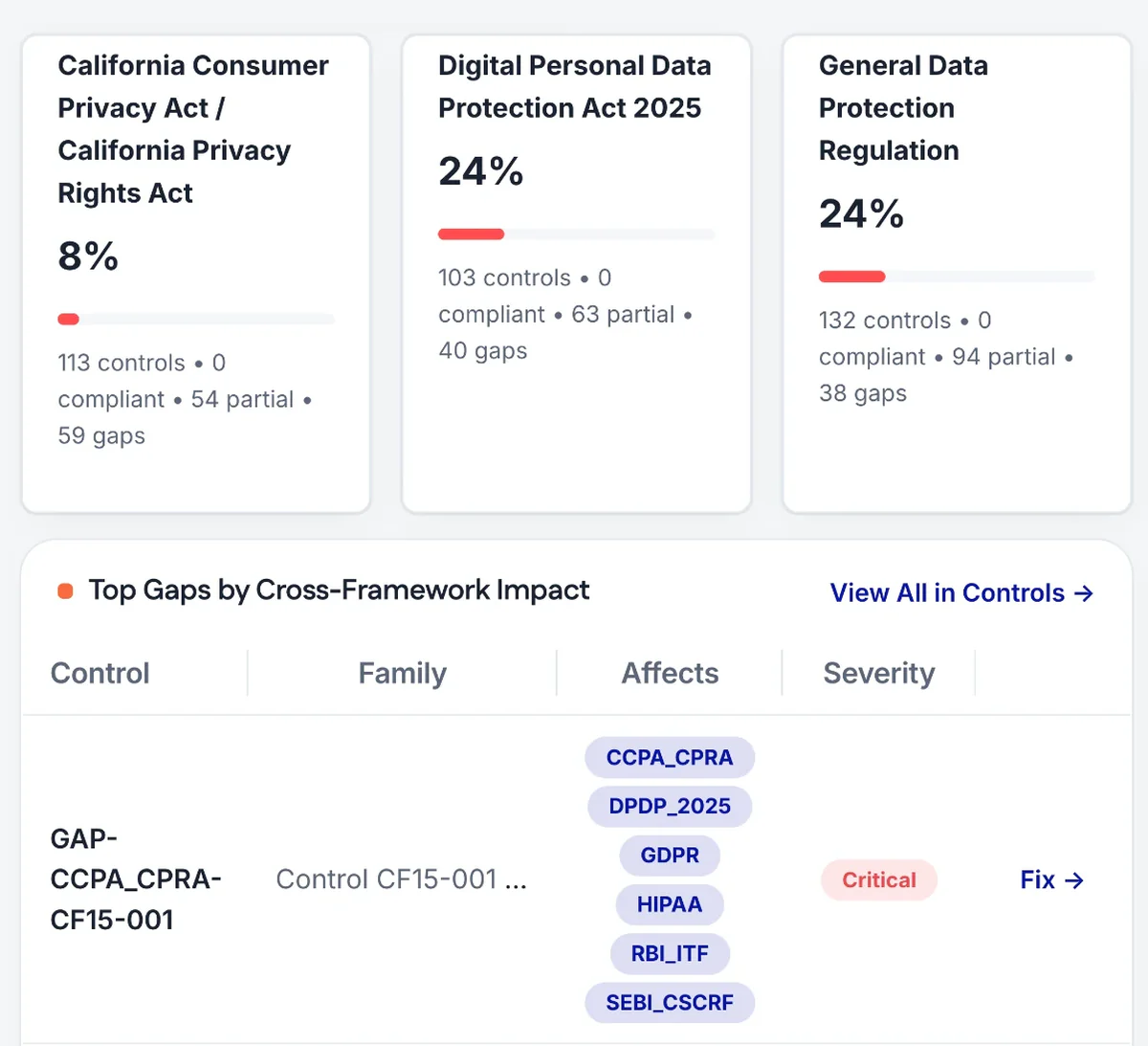
Framework reports
Re-scan after a fix
Deployed in your infrastructure
Read-only access
Dated, repeatable scans
Scope and gaps on the record
Sources you connect
Databases
Cloud storage
Microsoft 365
Google Workspace
SaaS and code
IRISRead-only access · Each connection tested
See it
Discover and classify
Data catalog
Control it
Access mapping and review
Access review decisions
Protect it
Protection checks
Risk scoring
Prove it
Audit evidence and compliance
DSAR and purpose
What you get
Coverage record
Evidence register
Framework reports
Re-scan after a fix
Deployed in your infrastructure
Read-only access
Dated, repeatable scans
Scope and gaps on the record
Sources you connect (databases, cloud storage, Microsoft 365, Google Workspace, selected SaaS and code) feed IRIS, with read-only access and each connection tested. IRIS branches directly into four pillars, in no order: See it (discover and classify, data catalog), Control it (access mapping and review, access review decisions), Protect it (protection checks, risk scoring) and Prove it (audit evidence and compliance, DSAR and purpose). What you get: coverage record, evidence register, framework reports, re-scan after a fix. Deployed in your infrastructure; read-only access; dated, repeatable scans; scope and gaps on the record.Capabilities vary by edition.
Capabilities
One platform, four pillars
Each pillar answers a question an auditor, a regulator or a customer will ask, within the sources you connect.
See it
Find and classify sensitive data in the sources you connect, with pattern rules, checksums and local name recognition.
Discovery and classification across databases and files
A data catalog with owners, purpose and retention
A coverage record: scanned, partial, failed and excluded
Data security posture management (DSPM) tools find sensitive data and show where the risk sits. Data security governance and management (DSGM) adds what an auditor asks next: what was checked, what was left out, who owns it and how you know.
IRIS builds that record from the connected systems. Each scan is dated, each finding links to its source, and the sources and tables it couldn’t read stay on the record.
Data security has four parts: people and skills, policy and process, technology, and assurance. IRIS is one component of the technology, alongside the tools you already run.
Real IRIS screens, from the first finding to the evidence for an audit.
Discover and classify
Find out what data you hold and where it sits
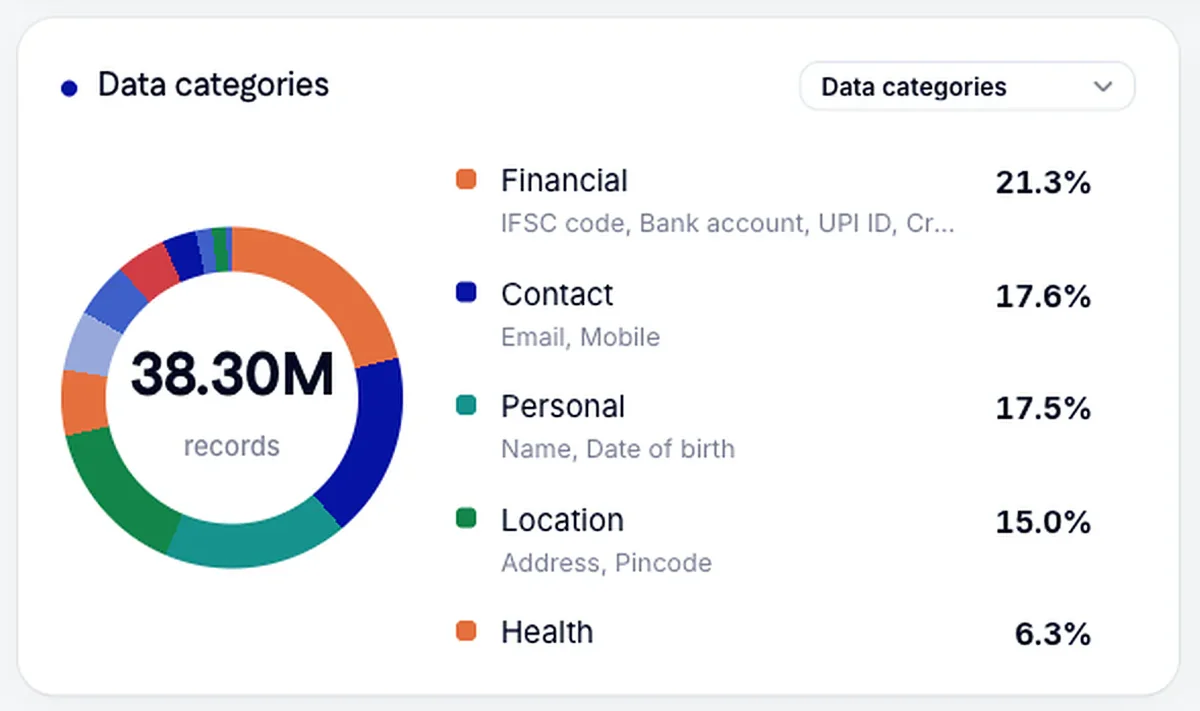
Personal-data records grouped by category across the sources you connect. Each finding behind a category links to its source and scan, for your reviewers to check.
103 built-in data types for Indian, US and global formats
9 identifier types checked by checksum, such as Luhn for cards
Personal-data records by category, from financial and contact data to health.
Access mapping and review
See who can reach sensitive data
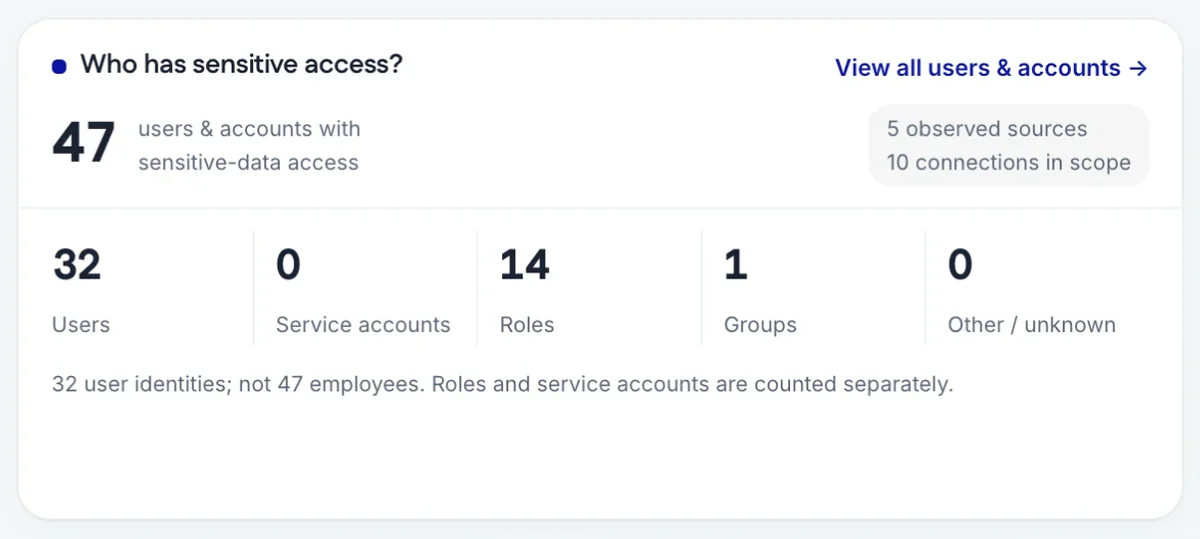
IRIS links users, service accounts, roles and groups to the sensitive data they can reach. On PostgreSQL, activity is tracked per database account unless audit logging is turned on.
Excessive-access rules, such as public access to sensitive data
Access unused beyond the 90-day default, or a period you set, where the source records activity
See it. Dipal Panchal’s order is discovery first, then who can reach the data, then whether it’s protected, because the other three pillars work on what discovery finds.
IRIS produces the evidence of where sensitive data is, who can reach it and how it’s stored. Your GRC tool runs the program, and your DLP or identity tools act on the findings. Read why teams choose IRIS
It does what DSPM tools do for the sources you connect, and adds the coverage record and evidence register an auditor asks for. The DSGM guide explains the difference. Read the DSGM guide
Engagements start with a scoped pilot, then an annual license. Pricing is shared after scoping.
Protect your brand. Start with your data.
Book a demo to walk through IRIS, or see what an evidence record holds in the sample report.