Owners, application and department
Records each asset’s owners and contacts, the application it belongs to and the owning department.
Data catalog. Data ownership. Asset certification.
The IRIS catalog keeps owners, purpose, retention and legal hold for each asset it discovers. Stewards certify each one, and each change is kept.
The record for one table in a core banking database, with who set each value and when.
| Field | Value | Set by |
|---|---|---|
| Asset | cbs.customer_master, a table in the core banking database | IRIS, at discovery on October 26, 2026 |
| Owners | Core banking product owner; core banking DBA as technical contact | Data steward |
| Application and department | Core banking; retail banking operations | Data steward |
| Purpose | Account servicing and regulatory reporting | Privacy team, from the purpose registry |
| Retention | Ten years after the account closes, per the bank’s records schedule | Inherited from the database record |
| Legal hold | None | Legal team |
| Certification | Verified on November 4, 2026; Draft on October 28; Unreviewed at discovery | Data steward; each change kept |
Dipal Panchal’s view: each business function should treat its own data as its own asset, and tell the CISO what to secure.
Records each asset’s owners and contacts, the application it belongs to and the owning department.
Records why an asset is kept, for how long and whether it is on legal hold, beside its owners.
Lets stewards mark each asset Verified, Draft, Unreviewed or Deprecated, and keeps each change with who made it and when.
Applies values set on a database to its tables unless a steward changes them, and shows where each value came from. The catalog also records where a person’s records sit, for DSAR search.
Capabilities vary by edition.
IRIS discovers schemas, tables and files in the sources you connect.
Each discovered asset gets one catalog record.
Stewards add owners, application, department, purpose, retention and legal hold.
Stewards mark the asset Verified, or keep it as Draft, Unreviewed or Deprecated.
DSAR search in connected databases starts from verified assets. Any change still happens in the source system.
Each discovered asset keeps its owners, application, department, purpose, retention and legal hold. Stewards mark each asset Verified, Draft, Unreviewed or Deprecated.
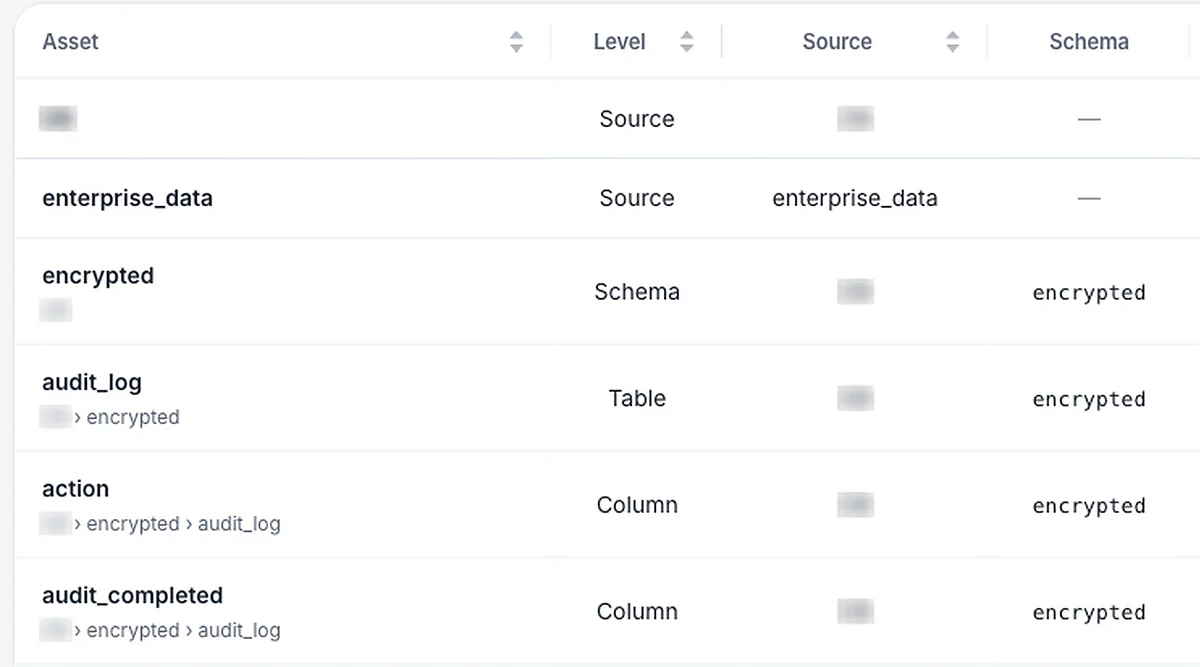
IRIS discovers schemas, tables and files in the sources you connect, and each discovered asset gets one catalog record.

The record names the owners and technical contact, and the retention period your stewards set or inherited.
Certification states carry their history: who changed the state, and when.
Legal hold is recorded on the asset itself, next to its owners and retention.
At the verified assets in connected databases; the change itself still happens in the source system.
The IRIS catalog governs the assets IRIS discovers, for security and privacy work: who owns each one, why it is kept and whether a steward has verified it.
A certification records that a steward reviewed the record. Whether a control is met stays your auditor’s judgment.
To see where catalog records come from during a scan, follow one on the how-it-works page.
Where catalog records start: sensitive data found in the sources you connect.
How verified assets feed data subject request search and the purpose registry.
Show your auditor who owns each asset and who verified it.
No. The IRIS catalog covers the assets IRIS discovers, for security and privacy work. Keep your enterprise catalog for lineage, business terms and data quality.
No. IRIS doesn’t map lineage or data flows between systems.
Your data stewards. IRIS records each certification state and its history, and doesn’t certify assets on its own.
No. Certification records that a steward reviewed the record and marked it Verified. Whether a control is met is your auditor’s judgment.
Yes. Values set higher up apply to the assets below unless a steward changes them, and each record shows where a value came from.
See catalog records, certification and legal hold, or take the product tour first.